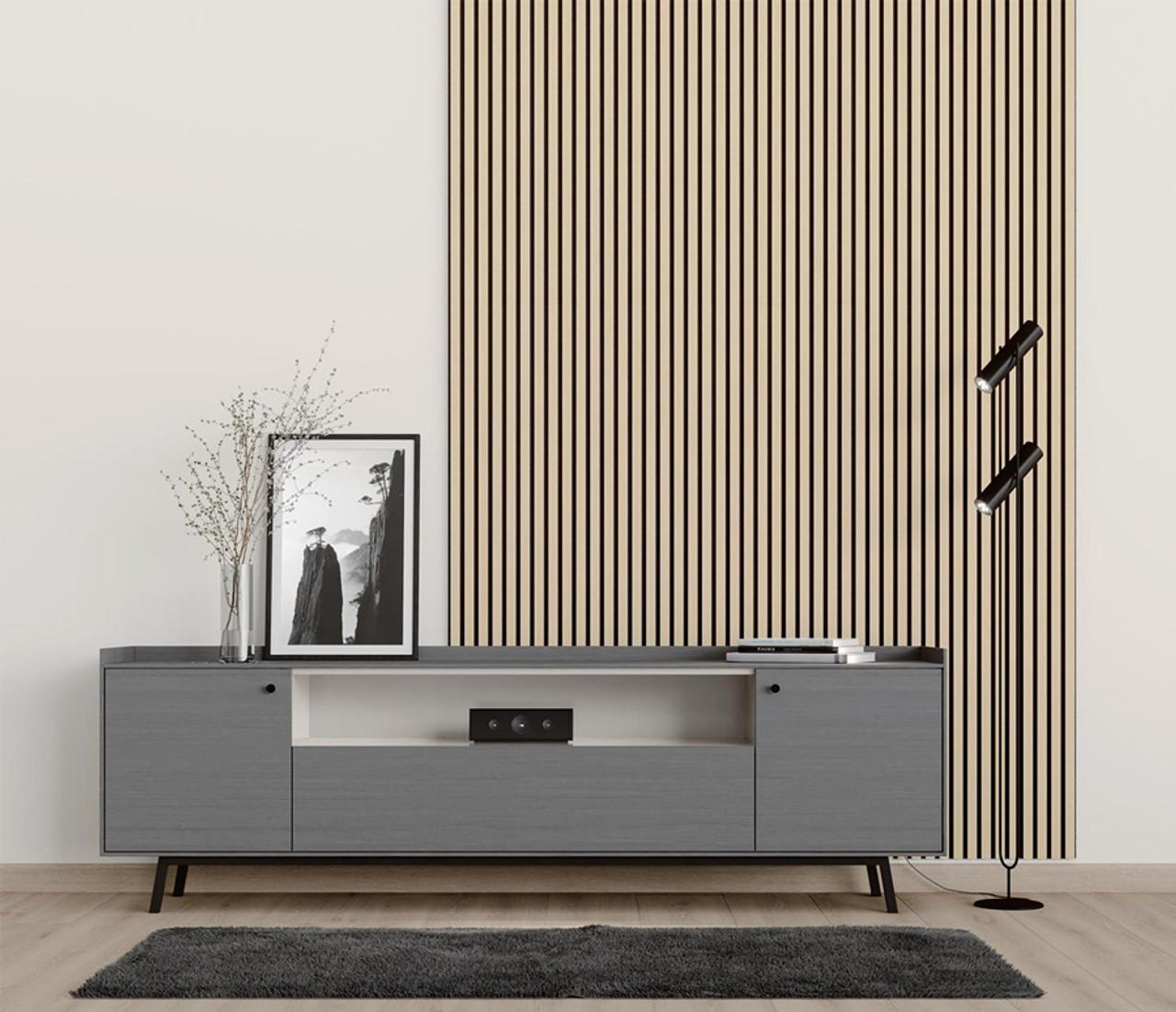
Controlling the room’s sound quality has grown in importance in recent years due to the proliferation of home theatres and music production. The use of acoustic panels is one viable solution to this problem. In order to provide a more immersive listening experience, acoustic panels are specifically engineered to absorb ambient noise and minimise reverberation.
Reducing room-wide echo and reverberation is an acoustic panel’s principal application. A brief echo can be produced when sound waves collide with solid objects, such as walls, degrading the quality of the original sound for a few seconds. The quantity of sound that is reflected may be greatly reduced by strategically positioning acoustic panels, which in turn improves the overall sound quality. Thick, porous materials are used in acoustic panels so that they absorb sound waves instead of reflecting them.
Acoustic panels are essential in home theatres for producing a lifelike soundstage. Any space with a lot of shiny surfaces might make it difficult to hear or understand what you’re listening to or viewing on screen. You can make your home theatre sound system more immersive by installing acoustic panels. This will ensure that your viewers can hear every detail of your favourite shows and movies. The layout and sound characteristics of the area will determine the best location for the acoustic panels. They can be mounted on walls, ceilings, or even corners.
Acoustic panels also work well in home studios and recording facilities. In order to achieve a constant and precise reproduction of sound, acoustic panels are utilised by professional musicians and producers. Artists may record high-quality audio free of undesired resonances with the use of acoustic panels, which manage the room’s echo and reverberation. A more refined sound, with smoother mixing and clearer vocals, is the result.
There are a number of things to think about while selecting acoustic panels. The material choice is a major consideration. Choosing the correct material is crucial because various materials absorb different frequencies of sound waves. To better absorb low-frequency sound waves, larger and denser acoustic panels may be useful in a space that has a lot of bass resonance.
Acoustic panel location is another important consideration. The precise placement of acoustic panels within a space is conditional on the nature of the noise problem. Acoustic panels, when placed on the ceiling and walls, provide an area devoid of reflections, allowing sound to bounce about without reverberation or echo. It is necessary, nevertheless, to try out many locations before settling on the optimal one for your room.
Acoustic panels are available in a variety of sizes and forms, giving customers even more freedom to express their individuality in the design of their space. Acoustic panels are a fashionable and practical way to enhance the sound quality of any room, whether it’s ultramodern or vintage. Picking a design that doesn’t sacrifice practicality is key, though. Noise absorption may be inadequate, for instance, in the case of acoustic panels that are too thin or easily damaged.
If you’re concerned about your health, acoustic panels are a good investment. Ear strain, migraines, and permanent hearing loss can result with prolonged exposure to extremely loud noises with a lot of reverberation and echo. Acoustic panels can lessen these dangers by lowering the quantity of room-reflected sound, making for a more comfortable listening environment. This is of utmost importance for audio enthusiasts and artists who spend long hours in their home theatres or recording studios.
Aesthetically pleasing designs are an added bonus to the sound-absorbing properties of acoustic panels. It is possible to have acoustic panels made to seem like they belong in a home theatre. Because of this, they may be seamlessly integrated into the ceiling or walls, offering a non-invasive option. In addition, a lot of acoustic panels provide options for customisation, including wooden frames or fabric wrapping, so consumers may make them appear exactly as they want.
When it comes to placement and mobility, acoustic panels are incredibly adaptable. Acoustic panels are convenient for home studios or short-term recording locations since they can be quickly and easily set up and taken down. Users are able to relocate their acoustic panels to different rooms or areas, making them a versatile option for diverse recording conditions.
As science and technology have progressed, acoustic panel materials have also improved, resulting in more efficient sound absorption. For instance, compared to more conventional materials, acoustic panels constructed from mineral wool, ceramic, or fibreglass offer superior sound absorption and thereby enhanced performance in a variety of settings. In fact, there are chemical-free acoustic panels available that pose zero risk to human health or the environment.
To further improve the quality of the sound, acoustic panels can be added to preexisting soundproofing materials like bass traps or soundproofing foams. When combined with acoustic panels, these foams significantly reduce the amount of sound that travels through otherwise impermeable surfaces. Additionally, they can be applied to the floor, walls, or ceiling for increased absorption and to block the transmission of vibrations from one area to another.
In conclusion, acoustic panels are an excellent investment for anybody looking to upgrade the audio in their home theatre, studio, or recording space. Their capacity to dampen background noise and cut down on reverberation makes for more interesting and engaging music. The appropriate acoustic panels may be chosen by users by taking into account aspects like material, positioning, and design in relation to their unique sound issues. Acoustic panels are a fashionable and practical way to enhance the sound quality of any room. They come in a wide range of sizes, shapes, and styles to suit any need. The market for acoustic panels is expected to increase due to the growing popularity of home theatres and music production. These panels are vital for establishing an ideal audio environment.