Fire protection is one of the most consequential responsibilities in the design, construction, and management of any building. The structural integrity of a building during a fire determines whether occupants have sufficient time to evacuate safely, whether emergency services can operate effectively within the structure, and whether the building itself survives the event in a condition that permits repair and continued use rather than requiring demolition and complete reconstruction. Steel, for all its remarkable qualities as a structural material — its strength, its versatility, its predictability under load, and its suitability for the full range of modern construction types — is a material that loses its structural capacity rapidly when subjected to elevated temperatures. The fire protection of structural steelwork is therefore not a peripheral construction detail but a fundamental safety requirement, and the contractors who deliver it carry a responsibility that is as serious as any in the built environment. Knowing how to identify, evaluate, and select the right structural steel fireproofing contractors for a specific project is knowledge of genuine importance for developers, contractors, specifiers, and building owners alike.
Why Structural Steel Requires Specialist Fire Protection
Steel’s behaviour under fire conditions is well understood and well documented, and that understanding is central to appreciating why specialist structural steel fireproofing contractors are essential rather than simply preferable. At temperatures of approximately 550 degrees Celsius — temperatures that can be reached within minutes of a fire taking hold in a typical building — structural steel loses approximately half of its load-bearing capacity. As temperatures continue to rise, this capacity loss accelerates, and without adequate fire protection, steel columns, beams, and frames can fail within a timeframe that provides insufficient opportunity for evacuation or emergency response.
Building regulations and fire safety codes in the UK and internationally mandate specific levels of fire resistance for structural steelwork — typically expressed in terms of the period of fire resistance required, most commonly thirty, sixty, ninety, or one hundred and twenty minutes. These periods are not arbitrary — they are calibrated to the evacuation time requirements, the anticipated fire development characteristics, and the emergency response capabilities relevant to different building types and occupancy categories. Achieving these required fire resistance periods reliably and consistently is the core technical mission of structural steel fireproofing contractors, and it is a mission that demands specialist knowledge of materials, application techniques, and quality assurance processes that generalist contractors cannot credibly claim.
The Principal Methods of Structural Steel Fire Protection
An understanding of the principal methods through which structural steel fireproofing is delivered is helpful context for evaluating the capability and expertise of potential contractors. The most widely used methods are intumescent coating, spray-applied passive fire protection materials, and board encasement systems, each of which has different performance characteristics, application requirements, aesthetic implications, and suitability for different structural and environmental contexts.
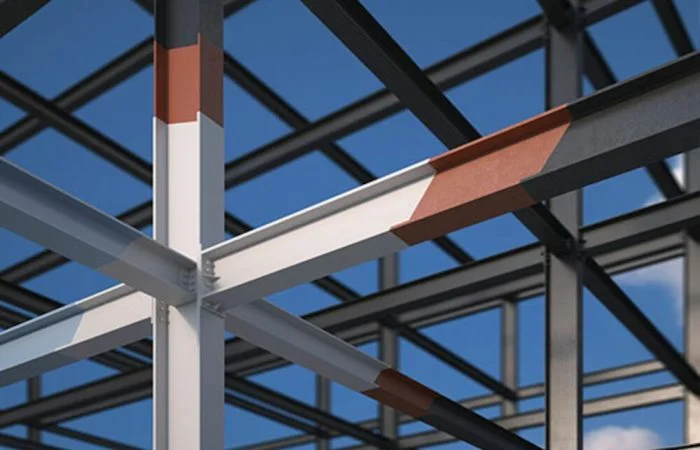
Intumescent coatings are thin film coatings that, when exposed to heat, expand dramatically — typically to many times their original thickness — forming an insulating char layer that slows the rate of heat transfer to the steel beneath. These coatings are popular in applications where the steel is to remain visible as a design feature, since thin film intumescent coatings can be applied to a thickness that allows the steel profile to be appreciated while providing the required fire resistance. Specialist structural steel fireproofing contractors working with intumescent systems must understand the specific product systems they are applying in detail — the correct film build thicknesses for different fire resistance periods and steel section sizes, the environmental conditions required during application and curing, and the quality verification processes that confirm the specified fire resistance has been achieved.
Spray-applied fire protection — cementitious or mineral fibre-based materials applied by spray to the steel surface — is widely used in industrial, warehouse, and commercial applications where the aesthetics of the finished steel surface are less critical and where the priority is achieving reliable fire resistance economically across large volumes of steelwork. The application of spray materials requires specialist equipment and trained operatives, and the quality of the applied protection depends critically on the consistency of coverage and thickness achieved across the full surface of the steelwork being protected.
Board systems — encasing steel sections in fire-resistant board materials — provide a clean-lined encasement that is suitable for columns and beams in environments where the appearance of the finished installation is important and where the installation sequence of the building programme allows board encasement to proceed effectively. Each of these methods requires specific expertise, and the most capable structural steel fireproofing contractors have experience across the full range rather than expertise in a single system.
The Qualifications and Accreditations That Matter
When evaluating structural steel fireproofing contractors for a specific project, the qualifications, accreditations, and professional memberships of the candidates provide important evidence of their technical capability and professional standards. The fire protection sector has recognised industry bodies and certification schemes that set meaningful standards — and contractors who have achieved these credentials have demonstrated compliance with requirements that unaccredited operators have not.
The Association for Specialist Fire Protection — the ASFP — is the leading industry body for the passive fire protection sector in the UK, and membership of the ASFP indicates that a contractor operates within a framework of industry standards, technical guidance, and professional development that supports quality and competence. Third-party accreditation schemes — including the FIRAS scheme operated by Warringtonfire and the IFC Certification scheme — provide independent verification that a contractor’s quality management systems, technical competence, and application processes meet defined standards. For clients specifying fire protection works, requiring FIRAS or equivalent third-party certification as a minimum qualification for tendering structural steel fireproofing contractors provides a meaningful baseline quality assurance that protects the integrity of the fire protection installed.
CHAS accreditation and equivalent health and safety pre-qualification credentials are important additional considerations given the nature of the work environments in which structural steel fireproofing is typically applied — active construction sites where the coordination of multiple trades and the management of access, working at height, and hazardous materials requires robust safety management systems.
Project Experience and Technical References
Beyond formal qualifications and accreditations, the practical project experience of structural steel fireproofing contractors is one of the most reliable guides to their capability for a specific project. Fire protection projects vary considerably in their complexity, scale, environmental challenges, and technical requirements — and contractors who have successfully delivered projects of similar scope and complexity to the one being tendered bring confidence and credibility that theoretical capability alone cannot provide.
Requesting specific project references — details of comparable completed projects, with contact information for the clients and principal contractors involved — and following up on those references with direct conversations about the contractor’s performance is one of the most valuable steps in the selection process. References who confirm that the contractor delivered to programme, maintained quality standards throughout, managed the interface with other trades effectively, and resolved any challenges that arose professionally and without disruption are providing evidence of operational capability that no tender document can substitute for.
The technical resources that a contractor brings to the project — their surveying and planning capability, the quality of their as-built documentation and certification records, their access to manufacturer technical support for the systems they apply, and the competence and experience of the site operatives who will actually deliver the work — are further dimensions of capability assessment that the most thorough selection processes investigate directly.
The Inspection and Certification Dimension
The completion of structural steel fireproofing works is not the end of the contractor’s responsibility — it is the beginning of the certification and documentation phase that provides the building owner, the insurer, and the regulatory authority with evidence that the fire protection installed meets the required specification. Comprehensive as-built records, including application thickness records, product batch certificates, third-party inspection reports, and the overall fire protection certificate that confirms the installed protection provides the specified fire resistance, are essential deliverables that professional structural steel fireproofing contractors provide as a standard component of their service.
The quality and completeness of this documentation is itself an indicator of the contractor’s professionalism and their understanding of the long-term importance of their work. A contractor who maintains rigorous documentation disciplines throughout a project and delivers comprehensive certification at its conclusion is demonstrating the commitment to quality and accountability that responsible fire protection demands. For building owners who will rely on this documentation for the lifetime of the building — in regulatory compliance records, insurance arrangements, and any future fire safety assessments — the value of thorough, accurate, and professionally presented certification from their structural steel fireproofing contractors cannot be overstated.
The selection of structural steel fireproofing contractors deserves the same rigour and deliberation as any other major project decision. The stakes — the safety of building occupants, the structural integrity of the building, and the regulatory compliance of the completed works — justify the investment of time and care that thorough contractor evaluation requires, and the right contractor, chosen well, delivers the confidence that every fire protection project demands.
Get in Touch:
NuColour London Sprayers – Cladding & Warehouse Roof Painting
3rd Floor, 86 – 90 Paul St, London EC2A 4NE
0330 133 3420
londonsprayers.co.uk