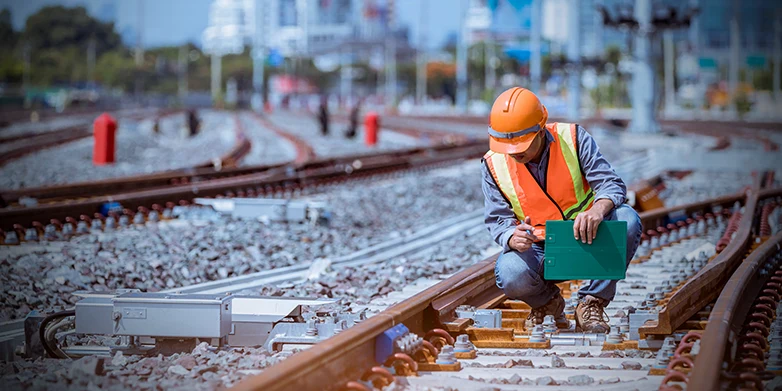
In order to keep workers safe in crowded places, such as construction sites, roadworks, and industrial settings, high visibility clothing is a must-have item. However, railway clothing must be different from other high visibility clothing due to the specific threats, distances, illumination, movement patterns, and operational demands that are present in railway environments. In reality, it is insufficient for railway workers’ clothing to only fulfil broad standards for good visibility. Railroad uniforms should be tailored to the unique needs of railroad workers in terms of both visibility and durability.
When discussing distinctive railway clothing, the focus should be on the design elements that account for how trains run, how platforms and tracks are laid out, how weather, time of day, and the possible backgrounds against which staff must be distinguished should be taken into consideration. The main takeaway for the general public is that railway clothing is specifically designed for rail use, as opposed to “like” other hi-vis clothing. That customisation aids in keeping operations safe and safeguards employees.
Perception from practical vantage points and distances
Railway clothing must be distinctive for a number of reasons, including the fact that recognition occurs at actual operational distances rather than controlled testing circumstances. Staff members working on or near the railroad may not have much time to effectively sight the approaching trains. In order to facilitate identification in both daylight and darkness, railway clothing should prioritise materials, reflective geometry, and structure.
Therefore, railway clothing is designed with strong retroreflective components that maximise light return when illuminated by car headlights. The design needs to take into consideration the normal line of sight on platforms as well as the angle at which drivers or other staff members coming can see an individual. The practical application of this recommendation is that railway clothing should have reflective panels and strips positioned such that the wearer is readily seen as an individual, rather than just a series of light bands.
This is another reason why it is important for railway clothing to not rely entirely on bright colours without also including reflecting elements. Lighting conditions and backdrop complexity are common in various settings. A person’s position and outline are made simpler to read by wearing distinctive railway clothing, which leads to safer decisions.
Unique layout for dynamic content, high contrast, and chaotic backdrops
Very seldom do you see an empty railway worksite. Structures, signs, obstacles, fencing, and machinery all sit beside tracks. Some examples of visually distracting elements that can be found on platforms are columns, lighting poles, and uneven surfaces. In order for staff to consistently stand out in such settings, railway clothing must create a significant contrast against a shifting backdrop.
Other forms of high visibility clothing may be primarily intended for general conspicuity; railway clothing should go beyond that by highlighting the garment’s capacity to stay identifiable even when worn. Workers shift, pivot, descend into uneven areas, and transport tools and supplies. It may be more difficult to understand the wearer if the reflective or high visibility parts of the clothing are placed in a manner that disrupts the visual continuity of their body as they move.
Consistent “human” recognition is thus a crucial design need for railway clothing. Wearers should be able to maintain a constant appearance regardless of their posture by strategically placing reflective and highly visible locations. When a person walks or does other activities, the reflective parts of their clothing shouldn’t move, twist, or otherwise damage the visual pattern.
The story goes beyond daylight performance.
Many people mistakenly believe that wearing brightly coloured clothing is the main purpose of high visibility apparel. Railway clothing must be functional under a broader spectrum of lighting situations, yet colour does matter. Drizzle, fog, frost, and heavy rain are all examples of weather conditions that can change the way reflected light returns and decrease the perceived brightness.
In order to work well in both diffuse and headlight illumination, distinctive railway clothing should have design features. In most cases, the high visibility hue used in railway clothing is chosen for its capacity to stand out against the regular railway environment. However, accurate identification cannot be ensured by hue alone. Because of this, engineered reflecting components and bright background areas should be used in railway clothing.
Also, when you’re on a railroad, you could encounter low-light situations first thing in the morning or last thing at night. Keep the contrast high enough so that onlookers can tell employees apart from trackside machinery. Every aspect of the garment’s design, from choosing fabrics to strategically placing reflecting elements, must adhere to the criteria of conspicuity.
Enhanced coordination with necessary safety gear and work apparel
Extra tools and layers are frequently required for railway work. Safety gear like as helmets, gloves, boots, earplugs, undershirts with high visibility, and harnesses may be required of workers. Because of the need to conceal these items without sacrificing visibility, railway apparel must be easily identifiable.
Even when wearing or moving equipment, railway clothing should continue to reflect light. Wearing clothing that isn’t designed to cooperate with safety systems can cause reflective portions to be obscured or shifted, reducing their effectiveness. As an example, when bending over or standing up, the straps might obstruct the reflective bands, or the length of the jacket could pull away from the body.
Therefore, distinctive railway clothing requires functional design elements that maintain consistent visibility. Garment construction that resists twisting when worn with normal protective gear is one example. Other examples include carefully cut garments with reinforced reflective locations. The way the sleeves and waistbands react when the wearer bends, lifts, or squats close to trackside structures must also be taken into account.
To put it another way, railway clothing must be made to accommodate how railway workers actually move and layer their protective gear, not just how it appears when sitting still.
Particular risk situations close to the track
There are dangers in railway locations that aren’t necessarily there in other high-visibility places. When operating near the edge of a platform, behind signalling equipment or beyond authorised operational limits, railway apparel must support safe working practices. Consequently, the clothing should make it easy for others to see the employees and pinpoint their precise location.
Because railway operations involve complicated movement patterns, this is of utmost importance. There may be times when employees are working near operational boundaries, and trains may come from all directions. By aiding in detection, location awareness, and obvious recognition, railway clothing is crucial in these settings for risk management.
Staff members can be better spotted in less-than-ideal lighting conditions caused by tunnels, bridges, or the design of some stations if they wear distinctive railway clothing. Not only in open spaces, but also across conventional railway station layouts, it should be constructed so that the wearer remains visible.
Sturdiness and longevity of clothing
Although a lot of high-visibility clothing is made for everyday wear, railway clothing must work well under pressure, cleaning, and other harsh situations. Employees on railroads frequently handle equipment that might cause clothing to wear and tear, and they operate outside in temperatures that can vary.
The reflecting properties of an item of clothing can diminish with time. In order for visibility to be consistent throughout the garment’s useful life, distinctive railway clothing should prioritise construction durability and reflective aspects. To keep the pattern and coverage as planned, design choices including abrasion resistance, robust reflective placement, and reinforced seams are useful.
Making sure something lasts a long time is important for both practical and safety reasons. Railroad uniforms are designed to withstand frequent washings, stretching, and general handling without losing their effectiveness. Wearing clothing with luminous materials can reduce their ability to both protect themselves and be seen by others if these components peel, crack, or shift.
The goal of this design is to make the wearer more distinguishable from others.
From a safety perspective, it’s not enough to just make some bright spots. Railroad uniforms should make it easy to see a person’s location, shape, and motion relative to others. That is why it’s important for clothing to have a distinct cut.
By strategically positioning reflective materials that adapt to the wearer’s shape as they move, distinctive railway clothing can accomplish this. Swifter interpretation of the wearer is possible if reflective areas form a consistent pattern over the trunk, limbs, and legs. Notification may be delayed, particularly when confronted with intricate backdrops, in cases when clothing employs sparse or poorly positioned reflective elements.
Nobody usually stops to consider how fast a train operator or coworker has to detect a person’s existence and whereabouts. The goal of railway uniform design should be quick identification through the use of a distinct silhouette and constant visibility.
The part played in a more comprehensive safety framework
Wearing the proper attire while working on railroads is just one component of a comprehensive safety system that also include regulations, protocols, training, and communication. Distinct apparel serves to bolster rather than displace these structures. Railway clothing promotes safer interactions between diverse positions and decreases the possibility of misjudgment by making staff more visible and recognised.
When railway clothing stands out from other high visibility apparel, it denotes that the hazards and work patterns are unique. It also promotes more uniformity in the tools that employees use. Staff members wearing railway-specific clothes, as opposed to generic hi-vis, helps establish credibility in the eyes of the public.
The bottom line is that railway clothing needs to be tailored to the conditions on trains.
In conclusion, the unique performance requirements of railway operations necessitate that railway clothing stand out from conventional high visibility apparel. Design elements that support visibility at realistic distances and angles, keep wearers identifiable while moving, work reliably in low light and crowded environments, and integrate with safety gear and layers of clothing should be highlighted in distinctive railway clothing. To further guarantee that protective intent stays effective on a daily basis, it should be long-lasting enough to maintain performance.
The most crucial lesson for the general public is that railway clothing is made to withstand the realities of rail operation. Its design aspects that set it apart are not just for show. There is a high demand for accuracy, timeliness, and detection in the workplace, and their purpose is to make people more noticeable, identifiable, and secure.