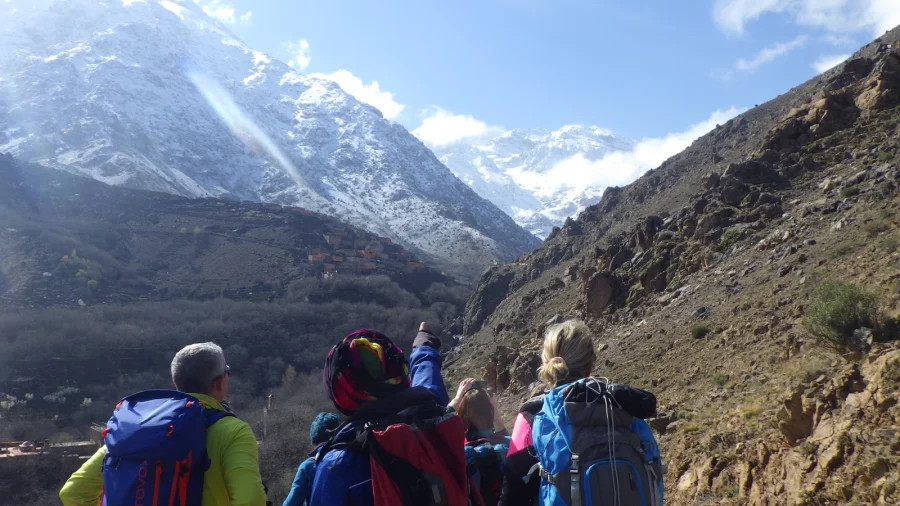
Nestled within the majestic High Atlas Mountains of Morocco, Mount Toubkal stands as North Africa’s highest peak at 4,167 metres above sea level. For adventure enthusiasts and trekking aficionados, a holiday centred around climbing Mount Toubkal offers an unforgettable experience that combines physical challenge, cultural immersion, and breathtaking natural beauty. Understanding what to expect during this journey will help you prepare adequately and make the most of your time in this remarkable corner of the world.
The journey to Mount Toubkal typically begins in Marrakech, Morocco’s vibrant fourth-largest city, which serves as the gateway to the Atlas Mountains. From this bustling metropolis, you’ll travel approximately 64 kilometres south to the village of Imlil, the traditional starting point for Mount Toubkal expeditions. The drive itself offers your first glimpse of the dramatic landscape that awaits, as the urban sprawl gradually gives way to rural Berber villages, terraced fields, and increasingly dramatic mountain scenery. This initial transfer usually takes around ninety minutes, depending on road conditions and traffic.
Upon arriving in Imlil, situated at 1,740 metres elevation, you’ll immediately notice the cooler mountain air and the slower pace of life that characterises these mountain communities. The village serves as a base for trekkers heading to Mount Toubkal, and you’ll find basic amenities including guesthouses, small shops, and places to arrange mules for carrying equipment. The atmosphere here is markedly different from Marrakech, offering your first taste of authentic Berber culture and hospitality that will accompany you throughout your Mount Toubkal adventure.
Most Mount Toubkal treks follow a standard two or three-day itinerary, though some trekkers opt for longer routes that explore the surrounding valleys and peaks. The classic route begins with a trek from Imlil to the Toubkal Refuge, also known as the Neltner Refuge, positioned at 3,207 metres. This first day’s walk typically takes between five and seven hours, covering approximately 11 kilometres with a significant altitude gain. The path winds through the Mizane Valley, passing through the village of Aremd and alongside walnut groves and juniper forests, before the landscape becomes increasingly barren and rocky as you approach Mount Toubkal’s higher elevations.
The terrain during your Mount Toubkal trek varies considerably depending on altitude and season. Lower sections feature well-maintained mule tracks that zigzag up the mountainside, whilst higher sections become rockier and more challenging underfoot. During summer months, the paths are generally dry and clear, making navigation straightforward. However, winter transforms Mount Toubkal into a snow-covered peak requiring crampons, ice axes, and mountaineering experience. Spring and autumn offer moderate conditions, though you should always be prepared for sudden weather changes in these mountains.
Accommodation during your Mount Toubkal expedition is decidedly basic but functional. The Toubkal Refuge provides dormitory-style sleeping arrangements with mattresses and blankets, though most trekkers bring their own sleeping bags for hygiene and warmth. Facilities include communal dining areas, basic washing facilities, and toilet blocks. Whilst the accommodation isn’t luxurious, it’s perfectly adequate after a long day’s trekking, and the camaraderie amongst fellow Mount Toubkal climbers creates a unique atmosphere. Some trekking groups opt to camp near the refuge, which offers more privacy but requires carrying additional equipment.
Summit day on Mount Toubkal typically begins in the early hours, often around 4 or 5 o’clock in the morning. This early start serves several purposes: it allows you to reach the summit and return before afternoon weather potentially deteriorates, provides the opportunity to witness sunrise from high altitude, and means you’ll tackle the steepest sections during the cooler morning hours. The ascent from the refuge to the Mount Toubkal summit usually takes between three and five hours, depending on your fitness level, acclimatisation, and the season. The final approach involves scrambling over scree slopes and rocky terrain, with the gradient increasing significantly in the last section.
Physical preparation for Mount Toubkal shouldn’t be underestimated, even though this isn’t a technical climb during summer months. The altitude presents the primary challenge for most trekkers, and you’ll likely feel the effects of thinner air, including shortness of breath, increased heart rate, and possibly mild headaches. Regular cardiovascular exercise in the months preceding your Mount Toubkal adventure will stand you in good stead, particularly activities that build leg strength and endurance such as hill walking, cycling, or stair climbing. However, even well-conditioned athletes can struggle with altitude, so maintaining a steady, sustainable pace is crucial.
The weather on Mount Toubkal can be extremely variable and changes rapidly with altitude. Valley temperatures might be pleasant and mild, whilst the summit experiences freezing conditions, particularly in the early morning. Summer daytime temperatures at lower elevations can exceed 30 degrees Celsius, whilst the Mount Toubkal summit might barely reach 10 degrees even in July or August. Winter brings snow, ice, and temperatures that can plummet to minus 20 degrees Celsius. Layered clothing is essential, allowing you to adjust to changing conditions throughout your trek.
Cultural experiences form an integral part of any Mount Toubkal trekking holiday, as you’ll pass through traditional Berber villages and interact with local communities. The Berber people have inhabited these mountains for centuries, maintaining traditional lifestyles that include terrace farming, shepherding, and increasingly, tourism-related activities. You’ll encounter mule handlers, local guides, and refuge staff, all of whom contribute to the Mount Toubkal trekking experience. Learning a few basic Arabic or Berber phrases enhances these interactions and demonstrates respect for local culture.
Food during your Mount Toubkal trek typically consists of hearty, carbohydrate-rich meals designed to fuel your exertions. Breakfast might include Moroccan bread, jam, cheese, and sweet mint tea, whilst dinners often feature tagines, couscous, or pasta-based dishes. The refuge kitchens prepare meals throughout the day, and you’ll also need to carry snacks and water for consumption during the trek itself. Water availability on Mount Toubkal varies seasonally, with mountain streams providing sources during wetter months, though water purification tablets or filters are advisable. During drier periods, water may need to be carried from Imlil or the refuge.
The sense of achievement upon reaching the Mount Toubkal summit is immense, particularly for those undertaking their first high-altitude trek. The panoramic views from the top encompass the entire High Atlas range, stretching towards the Sahara Desert to the south and the lower Atlas ranges to the north. On clear days, visibility extends for hundreds of kilometres, offering perspectives on just how vast and remote these mountains truly are. The Mount Toubkal summit itself features a triangulation pillar and often a Moroccan flag, where trekkers pause to take photographs, savour the moment, and replenish energy before beginning the descent.
Environmental considerations on Mount Toubkal have become increasingly important as trekking tourism has grown. The mountain environment is fragile, and the number of visitors has led to concerns about waste management, path erosion, and impact on water sources. Responsible trekkers should follow leave-no-trace principles, carrying out all rubbish, staying on established paths, and being mindful of their environmental footprint. The future sustainability of Mount Toubkal as a trekking destination depends on visitors treating the landscape with respect and care.
In conclusion, a trekking holiday to Mount Toubkal offers far more than simply climbing North Africa’s highest peak. It provides immersion in Berber culture, challenges your physical capabilities, rewards you with spectacular scenery, and creates memories that endure long after you’ve returned home. Whilst the trek demands good fitness, appropriate preparation, and respect for the mountain environment, Mount Toubkal remains accessible to determined trekkers without technical climbing experience during the summer season. Whether you’re an experienced mountaineer seeking a new challenge or a keen walker ready to step up to high-altitude trekking, Mount Toubkal delivers an adventure that combines natural beauty, cultural richness, and personal achievement in equal measure.