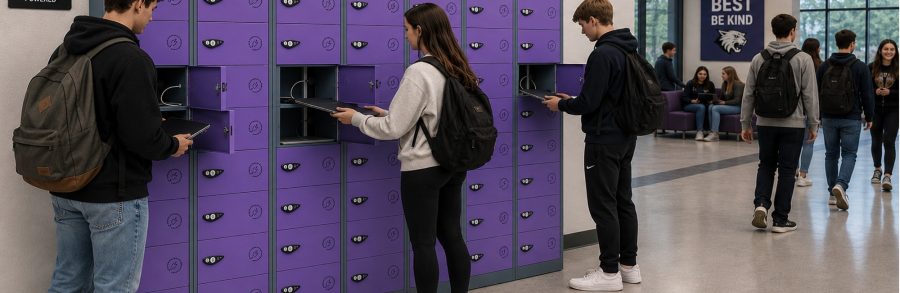
The global education landscape has shifted dramatically in the past decade, transitioning from physical textbooks and traditional blackboards to a fully interconnected digital ecosystem. As institutions adopt one-to-one computing initiatives, administrators encounter significant structural and logistical challenges in managing, securing, and maintaining a large number of costly electronic devices. One of the main challenges is keeping these tools operational and secure during the academic day, which has resulted in the quick adoption of dedicated laptop lockers in schools. These specialised storage systems are more than just hardware repositories; they function as a comprehensive campus utility that combines robust physical security with high-capacity electrical charging to enhance daily school operations.
As educational institutions shift to digital learning, they often find that existing campus infrastructure is inadequate for the significant electrical demands of numerous student devices needing simultaneous charging. Classrooms from decades past usually have very few wall outlets, resulting in dangerous tangles of extension cords across aisles that pose significant tripping risks for students and teachers. Integrating advanced laptop lockers in schools allows administrators to create centralised, safe, and efficient charging hubs. This approach alleviates the burden on classroom power outlets and significantly lowers physical safety risks. These charging units are designed to manage power distribution effectively, using advanced circuitry to provide stable electrical currents to multiple devices, preventing overloads and circuit breaker trips.
Moreover, the financial resources that modern districts allocate to their mobile computing initiatives are significant, necessitating strong safeguards against the ongoing risks of accidental physical damage and opportunistic theft. Standard hallway lockers do not have the required internal structure, spacing, or electrical access to safeguard sensitive electronics. This highlights the clear need for purpose-built laptop lockers in school campuses. When students leave their devices unattended during physical education classes, lunch periods, or extracurricular assemblies, these storage units offer a strong, steel-enforced barrier that prevents theft and assures administrators. The use of heavy-duty locks and strong, tamper-resistant construction guarantees that all institutional or personal property stays securely in place when not in use for classroom instruction.
Academic coordinators have noted that battery depletion is a significant disruption to daily workflows, frequently interrupting lesson plans and diminishing student engagement. A student arriving at a morning science lab or an afternoon maths exam with a dead device battery is locked out of the learning experience, leaving teachers to quickly find alternative paper assignments or temporary loaner devices. The introduction of smart laptop lockers in schools addresses this issue by offering students a convenient and dependable place to quickly recharge their devices during breaks, lunch, or study halls. This constant power availability keeps learning seamless, enabling students to concentrate on their studies without the stress of a dwindling battery icon.
The operational efficiency of IT departments in education significantly improves when a district installs centralised laptop lockers for school operations. School technology coordinators dedicate excessive time to fixing device failures, overseeing inventory, and identifying battery degradation problems caused by improper charging practices or unapproved third-party power cables. These charging lockers feature integrated cable management and certified power supplies, ensuring devices are charged in optimal conditions for battery health. This method of device maintenance significantly decreases the number of support tickets received by technology helpdesks, enabling IT staff to shift focus from routine cable management to essential instructional support and network security responsibilities.
One significant benefit of using modern laptop lockers in schools is the enhancement of student responsibility, organisational skills, and digital citizenship among students. When a campus assigns lockers to students or uses a check-in system, it promotes accountability, teaching students to manage and care for the valuable tools given to them. Having a secure, powered space for equipment storage teaches students to incorporate device maintenance into their daily routines, fostering habits that align with modern workplace expectations. This organised routine greatly reduces the occurrence of misplaced, lost, or overlooked hardware, resulting in substantial annual savings for districts in replacement and repair expenses.
The spatial optimisation of modern educational architecture is a strong reason why institutional designers advocate for premium laptop lockers in school floor plans. Traditional storage solutions tend to be large, taking up vertical space and leading to congested corridors during busy times between classes. Contemporary charging lockers utilise high-density vertical designs that optimise device storage per square foot, ideal for narrow hallways, media centers, common areas, or science labs. This effective use of physical space enables schools to sustain open traffic patterns while offering accessible charging infrastructure near key learning areas.
The integration of advanced storage units aids educational institutions in addressing equity gaps that often occur during the implementation of comprehensive digital learning initiatives across diverse student populations. Not every student has a stable home with reliable electricity or enough power outlets to ensure their device is fully charged before school starts. Implementing universally accessible laptop lockers for schools ensures that all students, regardless of socioeconomic status or living conditions, have consistent access to fully charged, functional technology daily. This support promotes an inclusive academic environment, ensuring that no student is disadvantaged by insufficient resources at home.
The health and wellness of students should be taken into account when assessing the various benefits of implementing high-quality laptop lockers in school buildings. Requiring students to carry multiple heavy devices, bulky chargers, and external battery packs in overloaded backpacks daily can lead to chronic back strain, poor posture, and long-term musculoskeletal issues. A secure, temperature-controlled, and always powered space on campus for overnight device storage helps students reduce their daily physical burdens when moving between home and campus. This adjustment to campus storage policies promotes better physical health among adolescents while ensuring devices are charged and ready for the next school day.
From an administrative management viewpoint, the latest laptop lockers for school districts offer exceptional oversight and asset tracking for valuable campus inventory. Many sophisticated storage systems have integrated network connectivity, enabling campus technology directors to remotely monitor occupied compartments, track power consumption metrics, and audit access logs in real-time. In the event of a missing device or unauthorised entry, administrators can quickly check digital timestamps to determine when a locker door was opened and by which user credential. This strong accountability significantly reduces internal theft and vandalism, fostering a safer and more transparent campus for all.
The environmental sustainability of educational institutions is enhanced by the smart engineering integrated into modern laptop lockers for schools. These advanced charging stations use smart eco-timers and sequential charging cycles to allocate power based on the actual battery levels of connected devices, rather than drawing continuous power from the grid all day. When a device is fully charged, the system smartly limits power to that compartment, preventing phantom energy use and significantly lowering the campus’s carbon footprint. This energy-efficient operation leads to significant long-term savings on utility costs for school districts, enabling taxpayer funds to be reinvested in essential instructional materials and classroom teaching staff.
Customisable laptop lockers for school facilities enhance daily operations, ensuring these storage solutions stay relevant and functional as educational technology standards evolve. These units feature modular interior components and adaptable power connections that can be reconfigured to fit changing device dimensions, different port types, or new categories of educational hardware. Whether a school transitions from traditional laptops to smaller tablets or adopts larger specialised digital tablets, the charging infrastructure remains intact and easily adjustable. This design philosophy ensures that the initial investment provides significant returns and dependable use for years ahead.
Ultimately, the peace of mind offered by these integrated storage systems is significant, as reliable laptop lockers in classrooms greatly reduce daily stress for educators. Instructors can confidently create innovative, tech-driven lesson plans, assured that their students will have fully functional equipment to run demanding educational software. Teachers can now avoid the first fifteen minutes of each class spent managing a chaotic search for chargers or adjusting lessons due to a lack of working batteries among students. By addressing the interconnected issues of power, security, space, and management, these lockers have established themselves as essential in today’s educational environment.