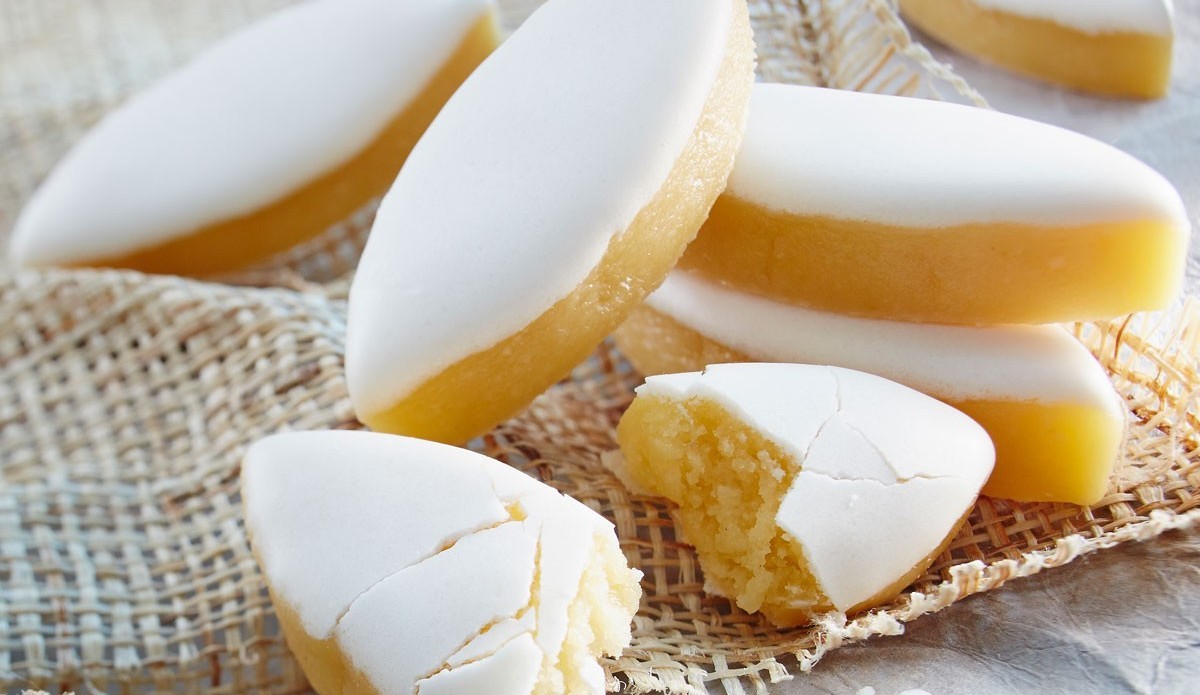
Famous for centuries, calissons are a type of French dessert that combines candied fruit with sugar, water, and almonds. Those fortunate enough to sample these delectable delicacies will never forget the symphony of tastes and sensations they provide.
The city of Aix-en-Provence in 16th-century France is where calissons were first made. Famous candies like these had their origins in the almonds, apricots, and candied fruits that the Provençal area was known for. This delectable dessert, originally intended as a luxury treat befitting royalty, was created by expert artisans by combining these delicate components with sugar and water.
Calissons are easily recognisable by their one-of-a-kind form. They are usually shaped like little cylinders and are around two or three inches long, making them the ideal snack to snack on. The Moors were a mediaeval North African tribe, and their Islamic calendars are supposedly the source of inspiration for this lovely design. The craftspeople of Aix-en-Provence used this blueprint as a basis for the now-iconic calisson form.
Traditional and well guarded, the skill of crafting calissons is both intricate and exacting. Because only a few people know the secrets handed down over the years, this art form is really one-of-a-kind in the world of French confections. To create the ideal flavour balance, the components are hand-picked and blended. After combining sugar, candied fruits, and almonds, a fragrant concoction is formed into the required shape and then dried until it’s just flawless.
It is the exquisite sweetness of calissons that is most noticeable. Instead of numbing the taste receptors with sugar, calissons aim to stimulate them. This is in contrast to many current sweets. Instead, they encourage the user to savour each bite by delving into the complex flavours within the sweet. You won’t have any sensory disappointments because every tiny layer brings out the flavour of its components, whether it’s almond or apricot.
The historical importance and delicious flavour of calissons have earned them the utmost respect across France. This little, exceptional gift from the world of French confections is something that every area of France that is involved in making calissons is proud of.
The flavour and symbolic significance of calissons are equally important to their appreciation. In their unwavering commitment to time-honoured practices and creative methods, these sweets encapsulate the French passion for tradition. As a tribute to this legacy, calissons are still a global phenomenon that people can’t get enough of.
Calissons, especially among gourmets and foodies, have seen a meteoric rise in popularity in recent years. Because of this newfound enthusiasm, classic methods have been rethought and new flavour combinations have been introduced, ensuring that calissons will continue to play an important role in French cuisine.
Making calissons is a labour-intensive procedure that takes a lot of time and demands a lot of talent. In order to obtain a harmonious blend of flavours and textures, artisans must meticulously choose and prepare the ingredients. Each calisson is meticulously made by hand to guarantee a consistent look and texture throughout the process.
Craftspeople are experts in their fields, but they also have an in-depth knowledge of the historical and cultural background. Craftspeople in France take great delight in continuing the centuries-old custom of making and eating caldissons. Confections made by skilled artisans using time-honoured methods and traditional ingredients have a rich symbolic heritage in addition to being tasty.
The capacity to bring back fond memories is a defining feature of calissons. The flavour and texture of calissons take many individuals on a nostalgic journey, frequently to a place and time when they were celebrating a special occasion with family or friends. Part of the reason for this quirkiness is the deep emotional connection that people have with these sweets, which makes them significant in their own lives and histories.
Calissons are significant not just to the French people but also to French culture and history. Symbolic of the nation’s heritage and pride, they have long been the subject of artistic and literary acclaim. Take the famed French poet and writer Alphonse Daudet’s portrayal of calissons as a typical French delicacy in his much-loved work, “Tartarin de Tarascon.”
Even in modern times, calissons are still deeply ingrained in French cuisine and culture. Many people’s sense of regional identity is based on the links that artisans have with their communities. The meticulousness with which traditional methods and ingredients are preserved demonstrates the everlasting significance of calissons in French life.
There are several ways in which calissons have influenced French culture. They are now considered classics of French folklore and a source of inspiration for many creative types. Because of the rich gastronomic history of the country and its distinctive flavours and textures, caissons have also been crucial in developing the national cuisine.
Last but not least, calissons are a one-of-a-kind French dessert that has won over palates all over the globe. They have become an integral part of French culture and cuisine thanks to their long history, exquisite craftsmanship, and mouth-watering flavours. For a sensory adventure that is equal parts exhilarating and reminiscent of simpler times, calissons are a real treat.