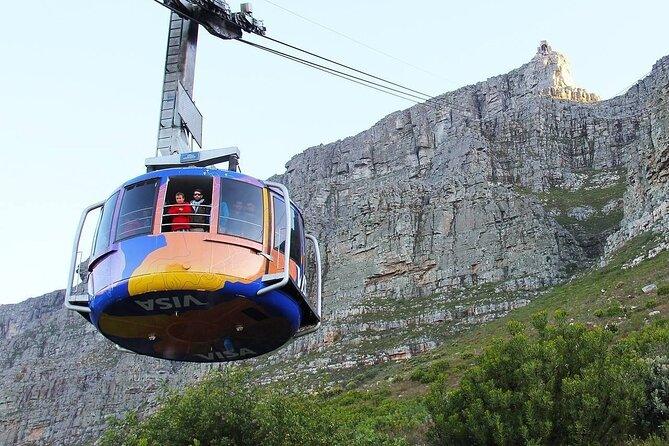
The Table Mountain cable car stands as one of Cape Town’s most beloved and recognizable attractions, offering visitors and locals alike an unforgettable journey to the summit of one of the world’s most famous natural landmarks. This engineering marvel has been transporting passengers to the top of Table Mountain for decades, providing breathtaking views and an exhilarating experience that has become synonymous with a visit to South Africa’s Mother City.
The history of the Table Mountain cable car dates back to the early 20th century when the idea of creating a mechanical means to ascend the mountain first took root. Prior to its construction, the only way to reach the summit was through arduous hiking trails, which limited access to only the most adventurous and physically fit individuals. Recognizing the potential for tourism and the desire to make the mountain’s spectacular vistas accessible to a wider audience, city planners and visionaries set out to create what would become an enduring symbol of Cape Town’s ingenuity and natural beauty.
Construction of the Table Mountain cable car system began in 1926, and after overcoming numerous logistical and engineering challenges, the first cable car made its maiden voyage on October 4, 1929. This momentous occasion marked the beginning of a new era for Table Mountain, transforming it from a distant, admired landmark to an accessible wonder that could be experienced up close by people from all walks of life.
The original Table Mountain cable car was a far cry from the modern, high-tech system in operation today. The first cars were wooden with small windows and a canvas roof, offering a somewhat nerve-wracking journey for early passengers. Despite its rudimentary design, the cable car quickly became a popular attraction, drawing tourists and locals eager to experience the mountain’s summit without the physical exertion of climbing.
Over the years, the Table Mountain cable car has undergone several upgrades and renovations to improve safety, capacity, and the overall passenger experience. The most significant of these upgrades came in 1997 when the entire system was overhauled and modernized. The new cable cars, which are still in use today, feature a revolutionary rotating floor that allows passengers to enjoy 360-degree views during the ascent and descent.
The current Table Mountain cable car system consists of two cars, each capable of carrying up to 65 passengers. These state-of-the-art vehicles are designed to provide maximum stability and safety while offering unparalleled panoramic views of Cape Town, the Atlantic Ocean, and the surrounding landscapes. The cars are suspended by cables and counterbalanced, meaning that as one car ascends, the other descends, creating a seamless and efficient transportation system.
One of the most remarkable features of the Table Mountain cable car is its ability to operate in various weather conditions. Cape Town is known for its unpredictable weather, with the infamous “tablecloth” of clouds often draping over the mountain. The cable car system is equipped with advanced weather monitoring technology and safety features that allow it to continue operating in winds of up to 65 km/h. However, passenger safety is always the top priority, and the service is suspended during extreme weather conditions.
The journey aboard the Table Mountain cable car is a thrilling experience that begins at the lower station, situated at an elevation of about 363 meters above sea level. As passengers board the car, excitement builds in anticipation of the ascent. The trip to the upper station, which sits at an impressive 1,067 meters above sea level, takes approximately 4-5 minutes, covering a distance of 1,200 meters.
As the cable car begins its ascent, passengers are treated to ever-changing views that become increasingly spectacular with each passing moment. The rotating floor ensures that everyone on board gets to experience the full panorama, from the sprawling cityscape of Cape Town to the vast expanse of the Atlantic Ocean. On clear days, passengers can see as far as Robben Island, where Nelson Mandela was imprisoned, and the peaks of the Hottentots Holland Mountains in the distance.
The Table Mountain cable car not only provides access to stunning views but also serves as a gateway to exploring the mountain’s unique ecosystem. Table Mountain is part of the Cape Floral Region, a UNESCO World Heritage site renowned for its incredible biodiversity. The mountain is home to over 2,000 species of plants, many of which are found nowhere else on Earth. By making the summit easily accessible, the cable car has played a crucial role in educating visitors about the importance of conservation and the fragile beauty of this natural wonder.
Upon reaching the upper station, passengers disembark to find themselves in a world that feels far removed from the bustling city below. The flat-topped summit of Table Mountain offers a variety of walking paths and viewpoints, allowing visitors to explore at their leisure. Informative plaques and guided tours provide insights into the geology, flora, and fauna of the mountain, enriching the experience for those eager to learn more about this unique environment.
The Table Mountain cable car has also had a significant impact on Cape Town’s economy and tourism industry. As one of the city’s premier attractions, it draws hundreds of thousands of visitors each year, contributing substantially to local businesses and employment. The cable car has become an integral part of Cape Town’s identity, featuring prominently in tourism marketing materials and serving as a symbol of the city’s natural beauty and adventurous spirit.
Despite its popularity, the operators of the Table Mountain cable car remain committed to sustainable practices and minimizing the environmental impact of tourism on the mountain. Efforts have been made to reduce energy consumption, manage waste effectively, and educate visitors about responsible tourism. The cable car system itself is considered an environmentally friendly alternative to increased vehicular traffic on the mountain, helping to preserve the delicate ecosystem while still allowing people to experience its wonders.
The Table Mountain cable car has not been without its challenges over the years. Maintenance of such a complex system in a harsh outdoor environment requires constant vigilance and periodic upgrades. The cable car undergoes regular inspections and maintenance to ensure the highest standards of safety are maintained. Additionally, the system is shut down annually for a few weeks to allow for more extensive maintenance work, ensuring that it continues to operate reliably for years to come.
Looking to the future, the Table Mountain cable car continues to evolve and adapt to changing technologies and visitor expectations. Plans are continuously being developed to enhance the visitor experience, improve accessibility, and further reduce the environmental footprint of operations. Ideas such as virtual reality experiences for days when weather conditions prevent the cable car from running, and augmented reality apps to provide interactive information about the mountain’s features are being explored.
The Table Mountain cable car has become more than just a means of transportation; it is an integral part of Cape Town’s heritage and a symbol of human ingenuity working in harmony with nature. For nearly a century, it has been bringing people closer to one of the world’s most remarkable natural landmarks, fostering a sense of wonder and appreciation for the beauty of our planet.
As visitors ascend in the Table Mountain cable car, they are not just embarking on a journey to a mountain top; they are participating in a tradition that has captivated generations. The cable car represents the realization of a dream to make the inaccessible accessible, to bring the majesty of nature within reach of all who wish to experience it. It stands as a testament to human ambition and the enduring allure of Table Mountain itself.
In conclusion, the Table Mountain cable car is more than just a tourist attraction; it is a gateway to adventure, a marvel of engineering, and a custodian of natural beauty. It continues to inspire awe in all who ride it, offering a unique perspective on one of the world’s most beautiful cities and the natural wonders that surround it. As long as Table Mountain stands watch over Cape Town, the cable car will remain an essential part of the city’s identity, inviting people from around the world to experience the magic of this South African icon.